PORTFOLIO / PROJECT 02
Mastering the Language of Leadership
A communication skills learning experience designed to help online managers communicate clearly, build stronger working relationships, and lead with confidence.

01
Project Overview
Mastering the Language of Leadership is a self-paced eLearning experience designed to help online managers strengthen their communication and feedback practices.
Through a realistic one-on-one meeting between a manager and employee, learners examine ineffective communication, identify opportunities for more specific and actionable feedback, and reflect on how they can apply effective coaching strategies in their own workplace interactions.
MY ROLE
TARGET AUDIENCE
TOOLS
PROJECT TYPE
FORMAT
Instructional Designer & eLearning Developer
Small business owners and employees
Articulate Rise 360, Google Forms
Leadership Development
Self-paced, scenario-based eLearning
02
Providing meaningful feedback can be challenging for managers leading remote teams. Without clear communication, employees may leave conversations uncertain about their performance, expectations, or opportunities for growth.
This learning experience addresses that challenge through a realistic manager–employee interaction. Learners examine ineffective feedback practices, consider their impact, and explore strategies for delivering clearer, more actionable feedback.

The Learning Challenge
03
My Design Approach
Learning through observation and reflection.
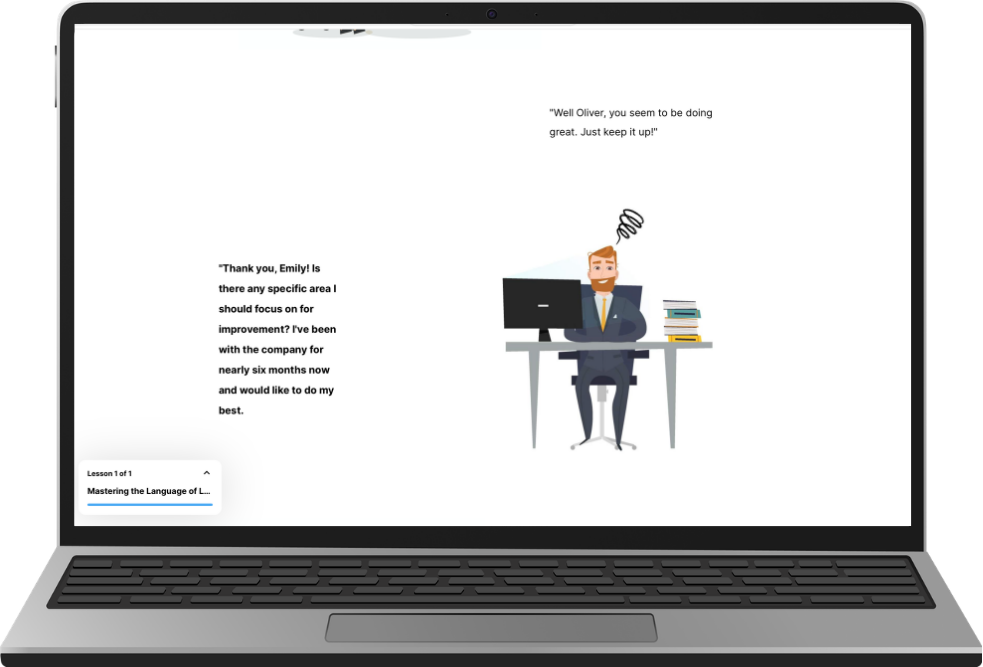
I designed the experience around a realistic one-on-one meeting between Emily, a remote team manager, and Oliver, an employee seeking guidance on his performance.
Rather than presenting effective feedback strategies in isolation, the course invites learners to observe a workplace conversation, identify missed opportunities, and consider how different communication choices could improve the interaction.
Knowledge checks, interactive cards, and a guided self-reflection activity encourage learners to connect the scenario to their own leadership practices.
Key Design Decisions
01
Story-Driven Learning
Built the experience around a realistic manager–employee conversation to illustrate the impact of ineffective feedback.
02
Interactive Knowledge Checks
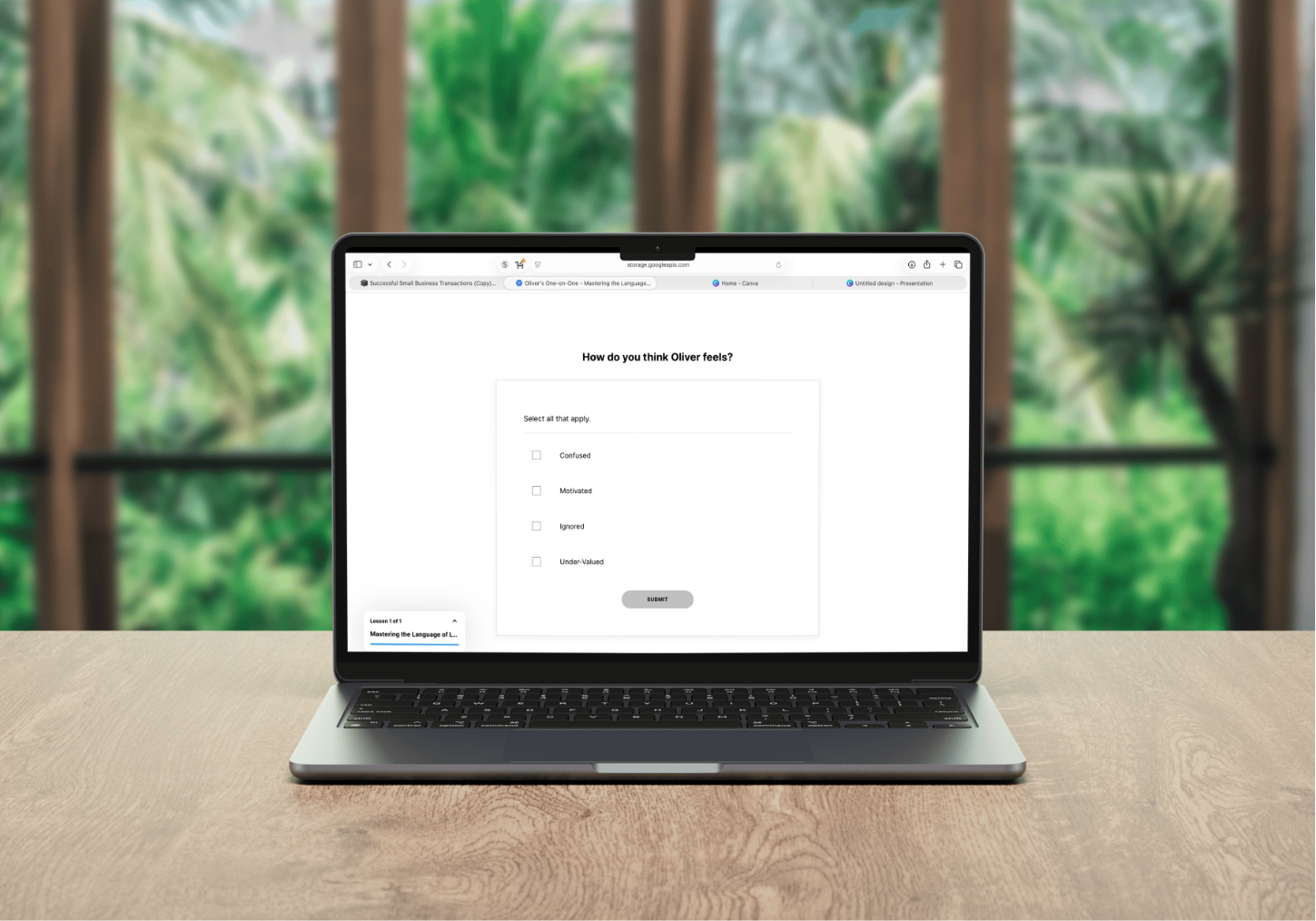
Used questions and interactive cards to help learners identify effective feedback practices and examine communication choices.
03
Reflection & Application
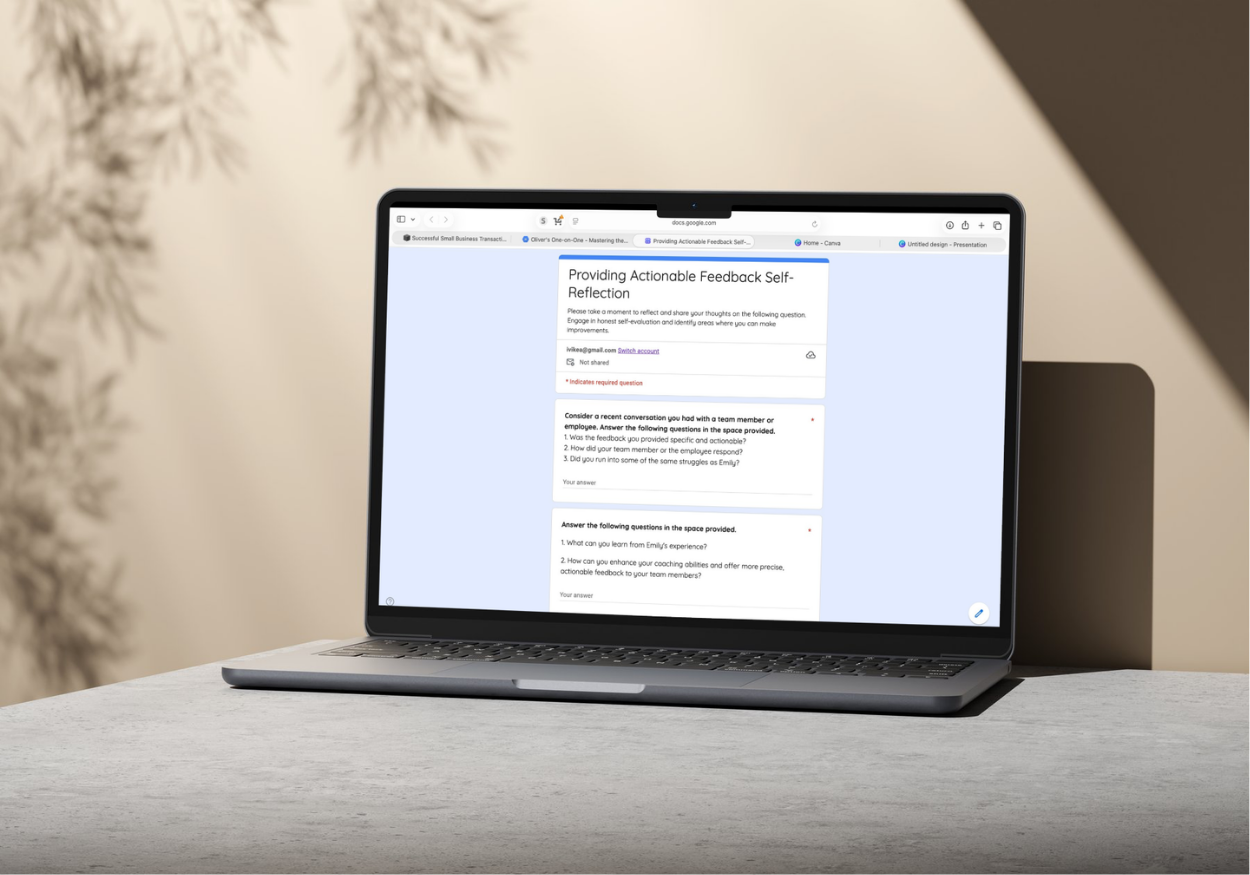
Included a guided self-reflection activity that encourages learners to evaluate their own communication and coaching practices.
04
A closer look at the moments that move learners from observing a conversation to examining their own communication practices.
Consider the employee’s perspective
After observing the meeting, learners examine how ineffective feedback can affect an employee's confidence, clarity, and sense of direction.
Connect learning to the workplace
A guided reflection invites learners to evaluate their own feedback practices and identify opportunities for more effective communication.
Inside the Learning Experience
05
Reflection & Next Steps
What I Learned
Developing this course strengthened my ability to organize complex information into a structured, self-paced learning experience. It reinforced the importance of designing purposeful interactions that encourage learners to apply their knowledge in realistic situations.
Evaluation Plan
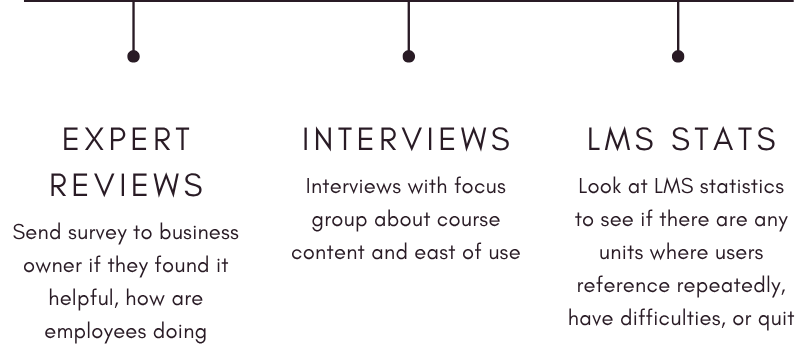
Although this portfolio demonstration has not undergone formal learner testing, I developed an evaluation plan incorporating expert reviews, learner interviews, and LMS analytics. These methods would help assess content relevance, usability, and learner engagement while identifying opportunities to improve the learning experience.